
16/06/2026


The impact of conflicts in the Middle East on the Vietnamese economy: Opportunities amidst the crisis.
Date 16-03-2026 Views 292
(TBTCO) - Conflicts in the Middle East could increase inflationary pressure, exchange rates, disrupt supply chains, and directly impact Vietnam's growth drivers. However, according to Dr. Nguyen Quoc Viet - Head of the Macroeconomics Research Group, School of Economics, Vietnam National University, Hanoi, there are opportunities amidst the crisis. The trend of restructuring global trade and investment chains could help Vietnam welcome a new wave of production relocation, if it maintains macroeconomic stability and proactively reforms its institutions.
PV: Given the tense developments in the Middle East conflict, especially the current US-Israel-Iran conflict, how do you assess its impact on the Vietnamese economy?
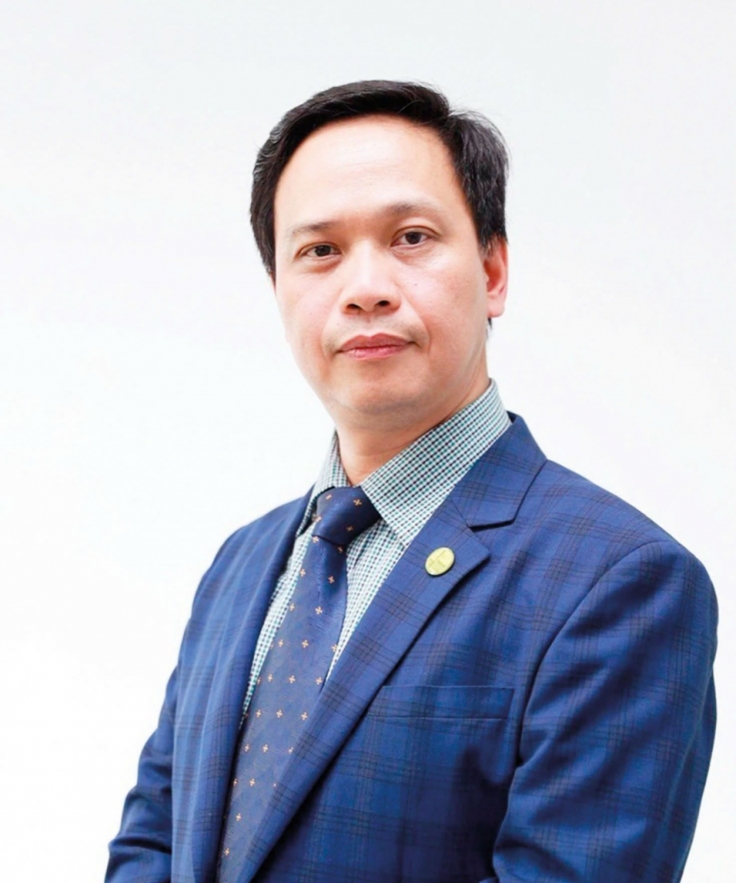 |
| Dr. Nguyen Quoc Viet |
Dr. Nguyen Quoc Viet: From a negative perspective, especially in the short term, if the conflict is prolonged and escalates, even spreading to many countries instead of being limited to one region, then the input costs for global production will increase. The prices of energy commodities such as oil and coal could rise sharply, thereby putting pressure on inflation and exchange rates globally.
Secondly, the risk of supply chain disruption is real if international transport and logistics routes are disrupted or more tightly controlled. This will directly affect the trade and production activities of many economies.
Thirdly, prolonged conflict could erode global consumer confidence and demand, causing world economic growth to slow down. In this context, many countries may continue to tighten monetary policy to control inflation and stabilize the macroeconomy, thereby impacting exchange rates and international investment flows. For Vietnam – a highly open economy where GDP growth depends significantly on exports and cross-border movements such as tourism – external shocks will have a direct impact. If the conflict continues, air transport operations will be affected, and international tourism will decline, which will be a significant drag. In short, if the conflict is not controlled soon and continues to spread, Vietnam's growth drivers will be negatively impacted, directly affecting the economic growth outlook for 2026 and the double-digit growth target set by the Government. However, not everything is negative. There is opportunity in crisis.
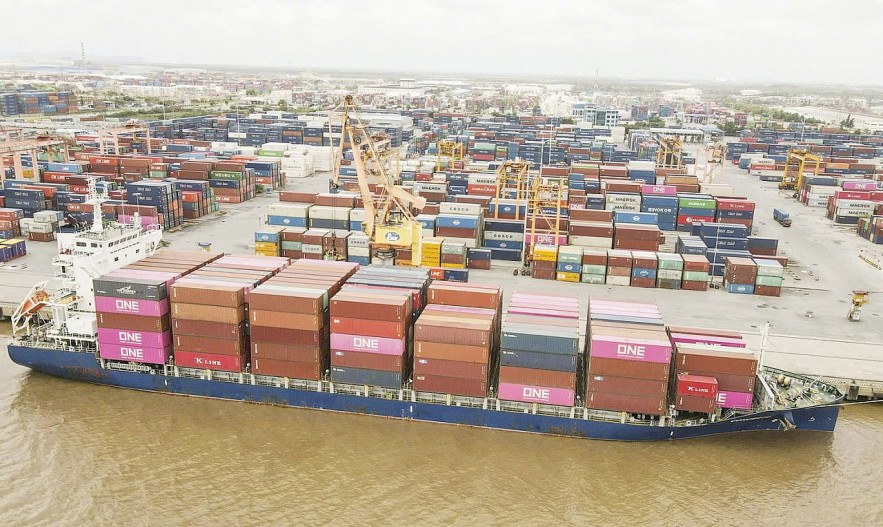 |
| Vietnam's economy continues to achieve high growth amidst the uncertainty and difficulties of the global economy.
scarves. Photo: An Thu |
Reporter: Could you elaborate on this statement?
Dr. Nguyen Quoc Viet:There are always opportunities in risks. Current geopolitical fluctuations may accelerate the restructuring of global trade and investment chains towards seeking safer destinations. Previously, this shift occurred to reduce the risk of dependence on a few large markets such as China. Now, as instability spreads from the Middle East to parts of South Asia, and even new hotspots emerge, the trend of diversification and risk dispersion becomes even more pronounced.
In this context, some industries where Middle Eastern or South Asian countries once strongly competed with Vietnam – such as textiles and footwear – may see a shift in orders again. Although global demand may shrink due to war fears, the market share will be redistributed, and countries considered stable and safe are likely to gain a larger market share. Vietnam, with its advantages of political stability, security, and balanced foreign relations, could become a destination for a new wave of manufacturing and investment relocation. However, to take advantage of this opportunity, proactive preparation is needed, especially from businesses. The relocated orders may no longer be purely large-scale production as before, but will be more specialized, requiring specific standards but offering better added value. According to Dr. Nguyen Quoc Viet, the Vietnamese economy has consistently achieved high growth amidst global economic uncertainties and difficulties. Macroeconomic stability has always been maintained and balanced, demonstrating the relatively good resilience of the Vietnamese economy. This also serves as a "buffer" to help Vietnam continue to withstand the complex developments from the current tense geopolitical conflicts. For example, the Halal market serving Muslim countries is a case in point. If the supply chain in the Middle East is disrupted and Vietnam develops a Halal product ecosystem that meets standards, this could become a potential market segment. Such opportunities may not generate a surge in trade volume in the short term, but they open up valuable niche markets if businesses are flexible enough to adapt. Regarding investment, the shift in trends will also be influenced by geopolitical competition among major powers. If large economies continue to implement stringent measures to ensure supply chain security, capital flows will prioritize countries considered "friendly," stable, and with low geopolitical risks. The reallocation of production and investment capital to stable economies like Vietnam is a completely plausible scenario. We need to be well-prepared in terms of institutions, infrastructure, and business capacity to effectively receive and utilize that wave of relocation.
PV: So, in your opinion, what are the solutions for Vietnam to cope with the negative impacts from the instability in the Middle East while still ensuring the 2026 growth target?
Dr. Nguyen Quoc Viet:Regarding immediate solutions, in my opinion, the most important thing is still to maintain macroeconomic stability. When major external fluctuations occur, such as a sharp increase in the price of raw materials and fuel, Vietnam can continue to apply the solutions implemented during the Russia-Ukraine conflict and global supply chain disruptions.
In reality, the measures at that time were quite appropriate, ensuring social welfare, maintaining the smooth operation of the logistics chain, and contributing to reducing inflationary pressure. Specifically, policies of tax exemptions, deferrals, postponements, and reductions, especially for gasoline and raw materials and inputs serving production and transportation, helped reduce input costs for businesses and people, creating conditions to maintain normal production and business activities, avoiding additional burdens in a difficult context. Maintaining macroeconomic stability is the core foundation, and flexible fiscal tools like those mentioned above are the key solutions to ensure economic stability during a period of volatility.
In the context of volatile export markets or declining demand from traditional markets, Vietnam needs to proactively implement solutions to support businesses in finding and exploiting niche markets. However, these are often specialized products, requiring both the government and businesses to be flexible in management and production, while also quickly seizing new opportunities.
Besides maintaining macroeconomic stability and supporting production recovery, creating a "buffer" for continuous production and business activities, attention should be paid to vulnerable labor groups. If instability affects the income of a segment of the workforce, the government should consider appropriate fiscal solutions to support low-income groups.
Simultaneously, it is necessary to closely monitor developments and develop scenarios to respond to emerging issues such as exchange rate fluctuations or inflation.
If necessary, there must be harmonious coordination between policies, especially monetary policy, to control and mitigate the negative impacts of external shocks.
In the long term, it is crucial for Vietnam to continue to affirm and strengthen its macroeconomic stability. Stability, not only in the economy but also in society and politics, will be a major "plus" for the investment, business, and production environment. This is a key factor in building investor confidence in a world still full of uncertainty.
Secondly, to attract new waves of investment, Vietnam needs to continue to promote policy and institutional reforms, thereby better meeting the increasingly high standards of the global production, trade, and investment chain, helping the economy increase its adaptability and participate more deeply in international value networks.
Thirdly, close coordination with the foreign policy strategy is necessary. On the one hand, Vietnam continues to affirm its image as a safe, friendly, and stable destination; on the other hand, it demonstrates a more proactive global role and responsibility in participating in resolving common global issues. In my opinion, recent diplomatic moves, including General Secretary To Lam's participation in the World Peace Council, contribute to strengthening trust and increasing the attractiveness of Vietnam to investment flows from its long-term strategic partners.
PV: Thank you sir!
Source: Thoi bao tai chinh Viet Nam


Tin liên quan


